
KOL and Influencer Marketing in Thailand: How to Choose, Brief, Pay and Measure
A complete Thailand KOL guide: creator tiers, vetting criteria, red flags, briefs, payment models, measurement by cost per order and a first-month plan.
Read article →Social & KOL

Photo: Unsplash
Short answer
LINE reaches about 56 million Thai users each month, equal to 82.6% of internet users. A LINE Official Account lets brands answer questions, build a customer list and send relevant offers. Treat it as your service desk and CRM, grow it from marketplace buyers and packaging, and measure block rate and orders.
Messaging reach in Thailand (millions)
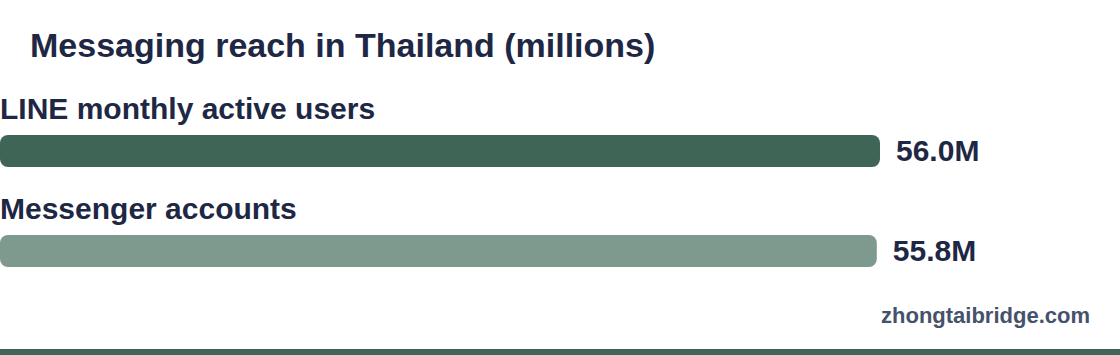
Horizontal bar chart. LINE monthly active users: 56.0M; Messenger accounts: 55.8M
LINE is part of daily life in Thailand: chat, news, payments and commerce. For foreign brands it is the natural place for customer service, repeat sales and loyalty because shoppers are already there. In a market where many purchase decisions close in private chat, a brand without LINE leaves its best customer relationship channel to competitors.
Plans, message quotas and pricing change, so check LINE for Business for current terms before you budget broadcast volume.
LINE Official Account set-up
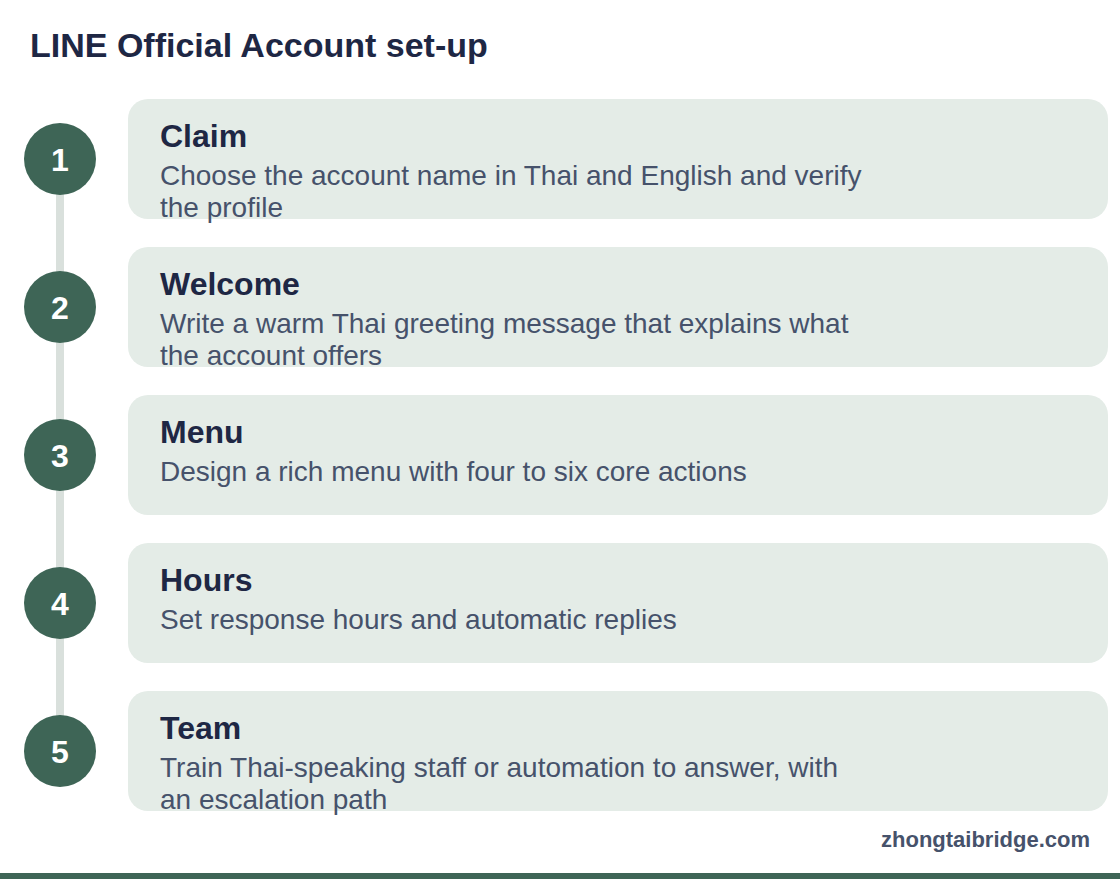
Process diagram. 1. Claim: Choose the account name in Thai and English and verify the profile. 2. Welcome: Write a warm Thai greeting message that explains what the account offers. 3. Menu: Design a rich menu with four to six core actions. 4. Hours: Set response hours and automatic replies. 5. Team: Train Thai-speaking staff or automation to answer, with an escalation path.
A starter rich menu usually includes shop now, current promotions, track my order, contact us, FAQ and follow other channels.
Invite buyers from marketplaces where platform rules permit, add QR codes to packaging and inserts, link the account from your website and social posts, and offer a clear benefit for joining such as a coupon or priority support. Do not buy followers: they inflate numbers, hurt engagement and add no sales. A 12-week plan works well: set up in month one, add QR codes and promotions in month two, launch two or three automated flows in month three (welcome offer, order tracking, replenishment reminder), then test broadcast timing and content from month four.
Message types and their jobs
| Type | Purpose | Frequency |
|---|---|---|
| Service | Order and delivery updates; builds trust | As needed |
| Educational | Care tips and how-to guides; reduces returns | Low |
| Offers | Limited-time promotions; drives orders | Sparingly |
| Reminders | Reorder prompts timed to product use | Triggered |
| Surveys | Short questions to inform product and content | Occasional |
Fewer, more relevant broadcasts keep block rates low. Segment by interest or purchase so that you do not send everything to everyone.
Write polite, short replies in natural Thai that answer the question first and offer a next step. Prepare templates for price, stock, shipping time, returns, product use and complaints. Review real chats weekly and update the templates. Automation helps with common questions but keep a clear path to a human for complex or sensitive issues, and measure how many chats end in orders.
Store customer data securely, collect only what you need and explain how you use it. Keep records of consent for marketing messages and seek advice on obligations under Thai data protection rules.
The example is illustrative. A brand sells a monthly consumable. After a purchase on a marketplace, the packaging insert invites the customer to scan a QR code for a usage guide and a small coupon. When the customer follows the account, a welcome message offers the guide and asks one question about how they plan to use the product. Twenty-five days later, a reminder suggests reordering and links to the store, and a customer who does not respond receives one follow-up message a week later. Customers who reorder receive a thank-you message and an invitation to share a photo review.
The flow runs automatically and is measured by follower growth, reorder rate and block rate. It turns a one-time marketplace buyer into a relationship the brand owns.
Should LINE replace our website? No. LINE is the conversation and retention layer, while your website and marketplace listings serve search and discovery.
Who should own LINE inside the company? A customer-facing owner with authority to approve replies and offers, supported by marketing for content and by analytics for reporting.
How many followers is enough? There is no universal number. Judge by active engagement, reorder rate and the share of orders that start in chat.
What are the biggest mistakes? Broadcasting too often, ignoring replies and failing to segment. Each raises block rates and wastes the channel.
Creating an account is free, and messaging plans have quotas. Check current LINE for Business terms.
It is strongly recommended. LINE helps you keep customers after the first marketplace sale.
Often enough to be useful and rarely enough to avoid fatigue. Start low and watch block rates.
They help with common questions, but keep a path to a human for complex or sensitive issues.
Sources
Build an audience and trust on the platforms Thai consumers use.
 Social & KOL
A complete Thailand KOL guide: creator tiers, vetting criteria, red flags, briefs, payment models, measurement by cost per order and a first-month plan.
Read article → Social & KOL
How to structure Meta advertising in Thailand: audience size, funnel budget split, creative testing, Thai copy, LINE handoff and measurement for new brands.
Read article → Social & KOL
How to structure creator agreements in Thailand: deliverables, approvals, usage rights, exclusivity, payment, disclosure and records. Not legal advice.
Read article →Tell us about your business and goals.
We'll reply within 1–2 business days with next steps.