Reaching Chinese-Speaking Audiences in Thailand: Visitors, Residents and Platform Choices
By ZhongTai Bridge Editorial · Last reviewed October 2026 · 5 min read
Photo: Unsplash
Short answer
Chinese-speaking audiences in Thailand include 4.47 million visitors in 2025 and an unknown number of residents, students and business travelers. Reach them with Chinese-language content on platforms they use before and during travel, accepted payment and service in Chinese, and partners that control access.
Who are the Chinese-speaking audiences?
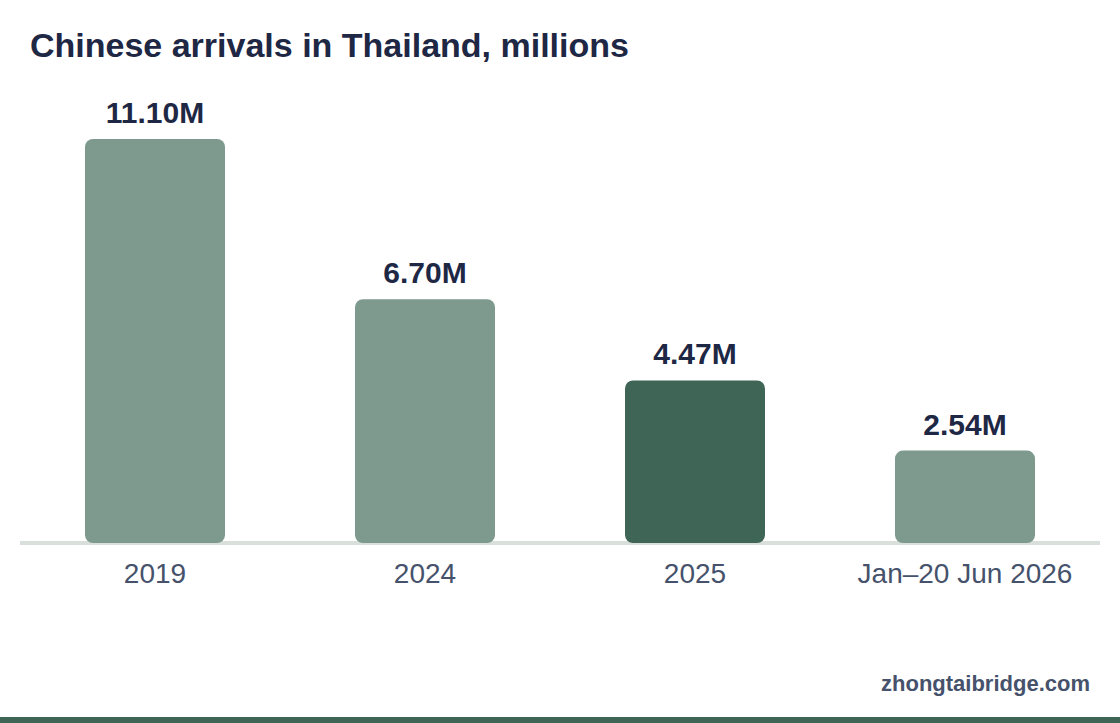
Visitors: 4.47 million arrived in 2025, and 2.54 million arrived between January and 20 June 2026, making China the largest source market so far this year.
Long-stay residents, retirees and digital workers.
Students and families.
Business travelers and expatriates working for Chinese firms.
Thai-Chinese consumers who read Chinese content.
Each group has different needs, budgets and information habits.
China was still the largest source market in 2026 to 20 June. Source: Ministry of Tourism and Sports.
Which platforms matter?
Visitors research and share on Chinese social and travel platforms, including Xiaohongshu, Douyin, WeChat and online travel platforms, where Thailand's tourism authority has signed cooperation agreements. Residents also use Thai platforms such as LINE and Facebook. Choose platforms by audience, and avoid duplicating content without adapting it.
Platform roles for Chinese-speaking audiences
Platform
Role
Xiaohongshu
Trip planning, reviews, local recommendations
Douyin
Short video discovery
WeChat
Enquiry, groups, service
Online travel platforms
Bookings and packages
LINE and Facebook
Residents and Thai-Chinese consumers
What content works before arrival?
Practical guides and itineraries with exact locations and prices.
Reviews with photos and real experiences.
Clear information on opening hours, payment methods and language support.
Collaborations with Chinese-speaking creators who actually travel to Thailand.
What do you need at the point of sale?
Staff or signage in Chinese.
Payment options that visitors can use.
Clear, honest pricing.
Easy contact through familiar channels.
Trust matters: a single negative story can spread quickly, as the 2025 decline in arrivals showed.
How do partners help?
Hotels, tour operators and online travel platforms control access to visitors. Partner for listings, bookings and co-marketing, and agree on commission and quality standards. Tourism bodies run campaigns that you can join.
How should you measure results?
Enquiries and sales by language and source.
Content performance on each platform.
Reviews in Chinese and Thai.
Repeat bookings and referrals.
A pre-arrival content plan for a consumer brand
Eight to six weeks before peak season: publish guides, price lists and itineraries in Chinese on the platforms your audience uses.
Four weeks before: brief Chinese-speaking creators who are traveling, and prepare a booking or reservation link.
During peak: monitor reviews and questions daily and reply in Chinese.
After the trip: ask for reviews and photos, and invite repeat visits.
Review: compare enquiries and sales by language to decide where to invest.
Service details that make the difference
Menus, labels and price lists in simplified Chinese with accurate translation.
Staff who can handle basic questions or a phone interpreter.
Clear information about tax refunds, payment methods and opening hours.
A named contact for group bookings and corporate visits.
How to treat residents and students differently
Residents shop for routine needs and compare prices across Thai and Chinese options. They respond to practical content on delivery, after-sales service and community recommendations, and they often use LINE and Chinese community groups. Segment communications so visitors receive trip-oriented offers and residents receive reliability and service messages.
A worked example: a Bangkok skincare retailer
The example is illustrative. A skincare retailer with two shops in tourist districts wants to attract independent Chinese travelers. It publishes a bilingual shop guide on Xiaohongshu with exact addresses, opening hours, payment methods and a short list of popular products, adds Chinese-language shelf labels with ingredient and usage information and offers a clear refund and tax-refund explanation at the till. It invites two Chinese-speaking creators who visit Thailand to review the shops and tags its location consistently. It tracks enquiries by language and uses the data to schedule Chinese-speaking staff for peak periods.
The retailer does not rely on arrival numbers alone. It watches the weekly arrivals data from the ministry and keeps flexible staffing, so a drop in visitors does not threaten the business. It also reaches Chinese-speaking residents through LINE and community groups, which keeps demand steadier.
Practical service standards for Chinese-speaking customers
Accurate Chinese translations of menus, labels and signs, checked by a native speaker.
Clear pricing in baht and, where useful, an approximate yuan reference with a note that rates vary.
Payment options suited to visitors and clear information on what is accepted.
A named contact and a messaging channel in Chinese for pre-visit questions and group bookings.
A simple escalation process for complaints, since a single negative post can travel widely on Chinese social media.
Executive questions on Chinese-speaking audiences
Is it worth investing in Chinese-language content for Thailand? Yes if visitors or Chinese-speaking residents are material to your sales. China remained the largest source market in 2026 to 20 June, but volumes are well below 2019, so size the effort to evidence.
Which platform should we start with? Start with the platform where your audience researches before travel, usually Xiaohongshu for independent travelers, and add others based on tracked enquiries.
How do we handle payments for visitors? Offer the options the visitor can actually use, state prices clearly in baht and check current acceptance rules for your location and category.
What is the biggest risk? Concentration on one source market. A sentiment shock in 2025 halved average daily arrivals within months, so diversify demand and keep costs flexible.
Frequently asked questions
Are Chinese visitors still important for Thai consumer brands?
Yes, although volumes are well below 2019, when 11.1 million visited. Build plans on scenarios.
Do I need to be on Xiaohongshu?
If Chinese visitors are a target, it is one of the most relevant platforms. Test with a small content program.
A complete LINE Official Account guide for Thailand: 56 million users, setup, rich menu, chat scripts, content, growth, segmentation, measurement and privacy.
A complete Thailand KOL guide: creator tiers, vetting criteria, red flags, briefs, payment models, measurement by cost per order and a first-month plan.
How to structure Meta advertising in Thailand: audience size, funnel budget split, creative testing, Thai copy, LINE handoff and measurement for new brands.