The Thai Food and Beverage Market: Channel Structure and Lessons for Chinese Brands
By ZhongTai Bridge Editorial · Last reviewed October 2026 · 6 min read
Photo: Unsplash
Short answer
Food and beverage in Thailand is shaped by channel structure more than by taste alone. Convenience chains emphasize ready-to-eat products, provision stores distribute through wholesalers, and platforms add video-led growth. Chinese brands succeed when they pick a channel first, localize flavor and price to it, and secure supply before they scale marketing.
Why start with channels, not flavors?
Chinese food and beverage brands often begin with product adaptation, which is necessary, but a product that fits the wrong channel struggles regardless of taste. Thai F&B flows through at least four routes: convenience chains, supermarkets and hypermarkets, provision stores and wholesalers, and online platforms. Each has different pack sizes, price points, margin structures, promotion calendars and requirements for shelf life and supply consistency.
CP All's own disclosures show the logic of one route: the company focuses on developing ready-to-eat categories, and its 15,945 stores end 2025 with sales shaped by food service. A brand that fits ready-to-eat formats, price tiers and daily replenishment may thrive there, while one that depends on explanation or premium positioning may do better in specialty retail or online.
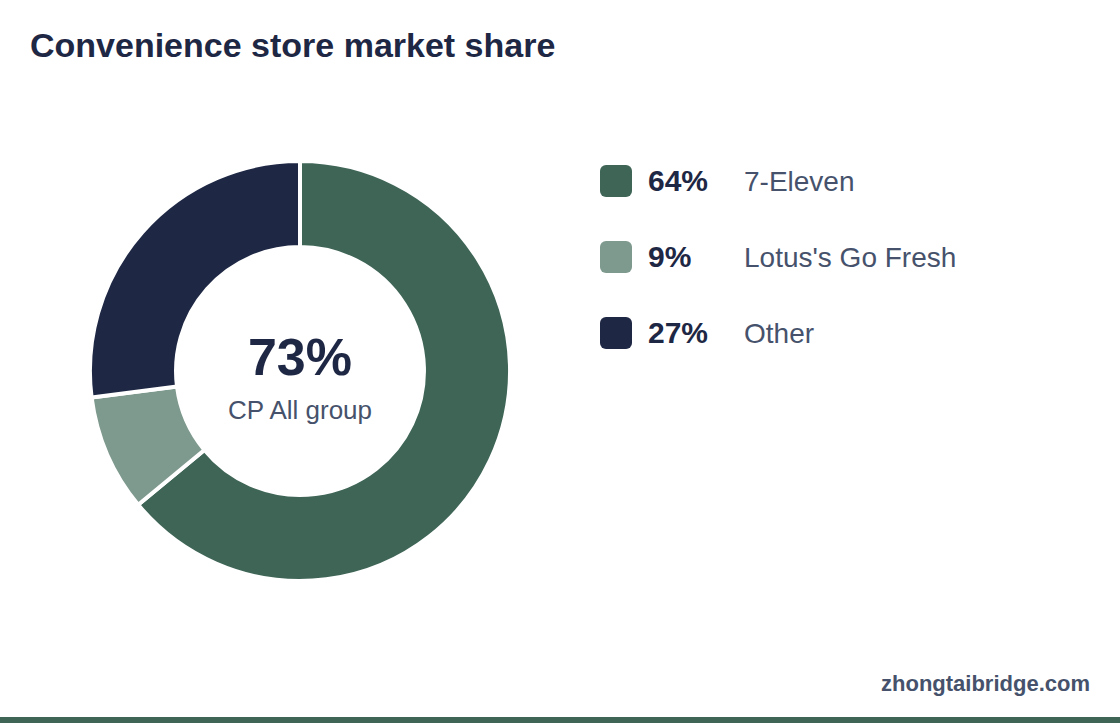
Convenience store market share
Donut chart. 7-Eleven: 64%; Lotus's Go Fresh: 9%; Other: 27%
Source: Beansprout analysis of CP All.
What do Thai convenience and traditional channels reward?
Test with Thai consumers, not only with Chinese partners. Run blind and branded tests across age groups and regions.
Adjust sweetness, spice, texture and portion size, while preserving the identity that makes the brand different.
Check naming and packaging in Thai for pronunciation, meaning and legal clarity.
Consider dietary and cultural requirements, such as halal certification for relevant categories.
Match price tiers to the channel and benchmark against local and international competitors.
Treat regulatory requirements for food registration, labeling and ingredients as a gating item and confirm them with a qualified adviser early.
How does e-commerce change F&B?
Platforms are among the fastest-growing routes. Thailand's platform e-commerce grew 51.8% in 2025 according to Momentum Works, and video-led selling suits products that look appealing, can be tasted by creators and are bought on impulse. Food delivery and cold chain add complexity: shelf life, packaging and delivery temperature determine reviews and returns. Plan for these before you scale advertising.
What are the supply chain realities?
Shelf life and import lead times: long sea transit and customs clearance eat into shelf life.
Local production or co-packing: reduces lead times and may improve cost, but demands quality control.
Cold chain and storage: required for fresh or chilled categories.
Seasonality and festivals: demand peaks around holidays and sale days.
Counterfeits and parallel imports: brand protection matters in popular categories.
How should a Chinese F&B brand sequence entry?
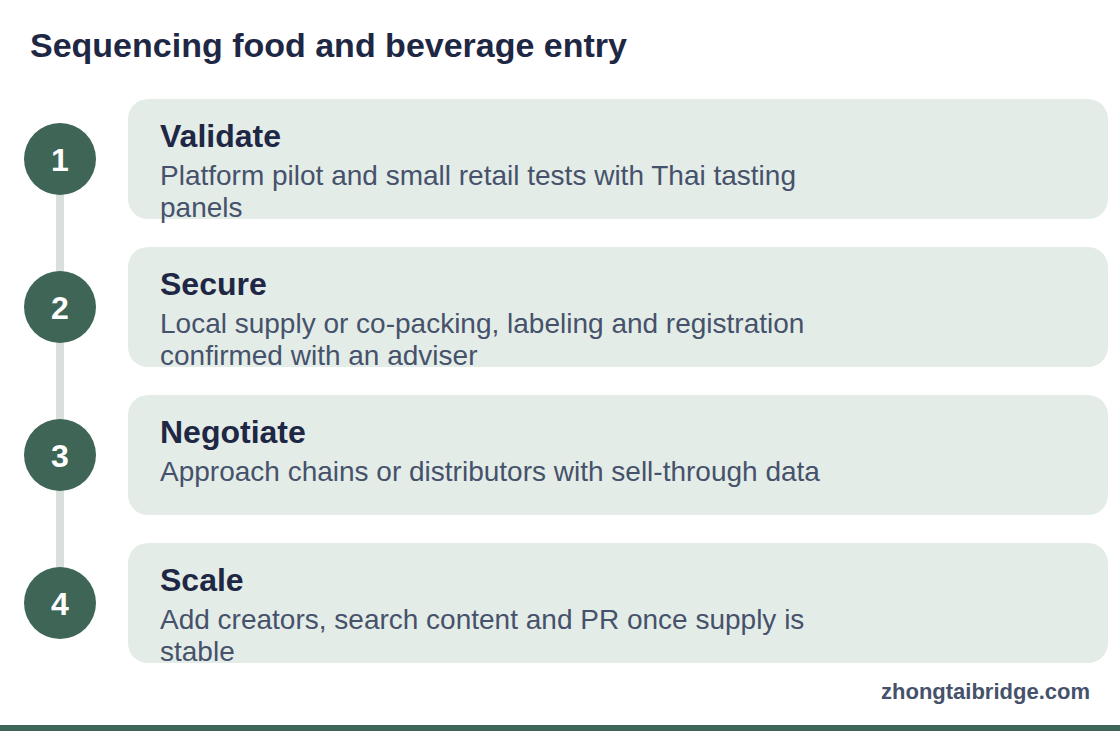
Phase 1: validate with a platform pilot and a small number of retail tests.
Phase 2: secure local supply and distribution, and finalize product and price tiers.
Phase 3: negotiate with chains or distributors using sell-through data.
Phase 4: scale marketing through creators, search content and PR.
Sequencing food and beverage entry
Process diagram. 1. Validate: Platform pilot and small retail tests with Thai tasting panels. 2. Secure: Local supply or co-packing, labeling and registration confirmed with an adviser. 3. Negotiate: Approach chains or distributors with sell-through data. 4. Scale: Add creators, search content and PR once supply is stable.
A pre-launch checklist for food and beverage
Product registration and labeling requirements confirmed with a qualified adviser.
Shelf life sufficient for import and distribution time.
Thai name, ingredients and allergen information verified.
Price tiers set for each channel.
Taste and packaging tested with Thai consumers.
Storage, cold chain and delivery plan.
Platform content with clear photos and usage ideas.
Naming, packaging and shelf-life decisions that decide entry
Names and packaging do more work in food than in most categories because shoppers decide quickly at shelf or in a feed. Check the Thai pronunciation and meaning of the product name, make flavors and benefits legible in Thai at a glance, and design pack sizes for the channel: single-serve for convenience, multipacks for hypermarkets and gift sets for platforms. Shelf life is a hidden gate: import transit and customs clearance consume days that retailers expect to see on the label, so local production or co-packing can be the difference between a listing and a rejection. Confirm registration, labeling and ingredient requirements with a qualified adviser before you print packaging.
A worked example: a Chinese ready-to-drink tea brand
The example is illustrative. The brand has a tea drink popular in China. It runs a Thai taste panel and finds that the sweetness level is too high for many respondents while the flavor profile is attractive. It creates a lower-sugar version, tests packaging with Thai names and benefit statements and pilots on a marketplace and in a limited set of convenience outlets through a distributor. It tracks sell-through, repeat purchase and comments. Marketplace data show that multipacks sell well, while convenience stores favor single bottles at a specific price point. The brand develops both formats and plans a creator campaign around taste tests.
The case shows the interplay of product, price, pack and channel. Each decision is tested with Thai buyers before scale.
Questions for a Thai distributor in food and beverage
Which retailers and regions do you serve, and how frequently?
What are your cold-chain and storage capabilities?
How do you manage returns, expiries and promotions?
What payment terms and credit controls apply?
What reporting will you provide on sell-through and stock?
Executive questions on food and beverage
Do we need to adapt taste for Thailand? Test with Thai consumers. Many products need adjustments in sweetness, spice or texture, while keeping what makes the brand distinct.
Is convenience retail the best first channel? It can be for ready-to-eat items, but platforms and distributors are often better first steps while you gather evidence.
How do we manage shelf life? Plan transit and clearance times, consider local production and confirm labeling requirements with advisers.
What approvals are needed? Requirements depend on the product. Confirm registration and labeling rules with a qualified adviser before launch.
Frequently asked questions
Is Thailand a good market for Chinese food and beverage brands?
It can be, particularly in categories where the brand has a clear point of difference, but entry requires local testing, supply planning and channel fit.
What is the biggest mistake?
Scaling advertising before the product, price and distribution have been validated in the Thai channel you intend to use.
Do I need local production?
Not necessarily at the start, but local production or co-packing can reduce lead times and risk as you scale.
Thailand's digital economy is projected at US$56 billion in 2025. Why sources disagree on growth, what drives it and how to model it for your entry plan.
Thailand taxed low-value imports with VAT from February 2025 and duty from 1 baht on 1 January 2026. What changes for Chinese sellers and how to respond.