
PR in Thailand for Foreign Brands: How to Earn Credible Coverage
How foreign brands earn credible coverage in Thailand: newsworthy angles, Thai-language releases, media targeting, spokespeople, timeline and measurement.
Read article →PR & Media

Photo: Unsplash
Short answer
Reputation can shift within weeks on social media, as the 2025 drop in Chinese arrivals showed, and visible dominance attracts scrutiny, as the EV sector showed. Prepare a risk map, a response protocol with named roles, Thai-language holding statements and clear escalation, and practice before you need them.
Two recent cases illustrate the dynamics. In early 2025, negative sentiment on Chinese social media after the disappearance of a Chinese actor near the Thai border contributed to a sharp fall in Chinese arrivals, with daily numbers dropping by roughly half between January and June. In the electric vehicle sector, rapid price cuts and a market share of about 89% for Chinese brands drew government scrutiny. Reputation depends on both public narrative and regulatory attention.
Average daily Chinese arrivals in Thailand, 2025
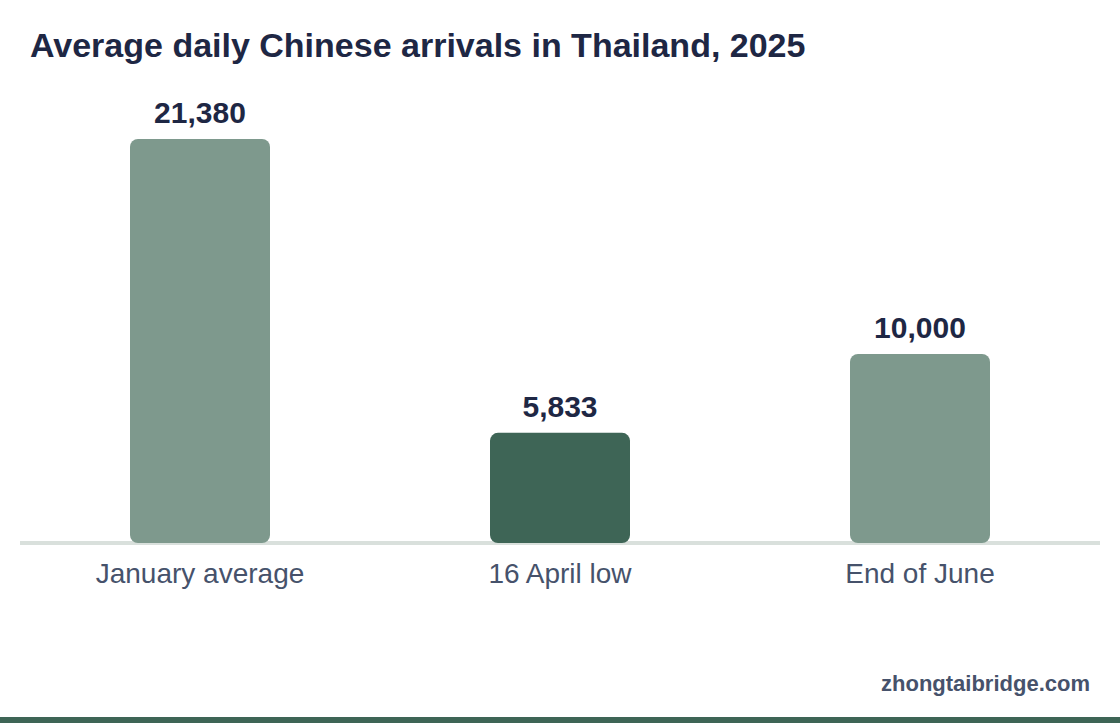
Column chart. January average: 21,380; 16 April low: 5,833; End of June: 10,000
Score each by likelihood and impact, and assign an owner.
Risk map: likelihood and impact
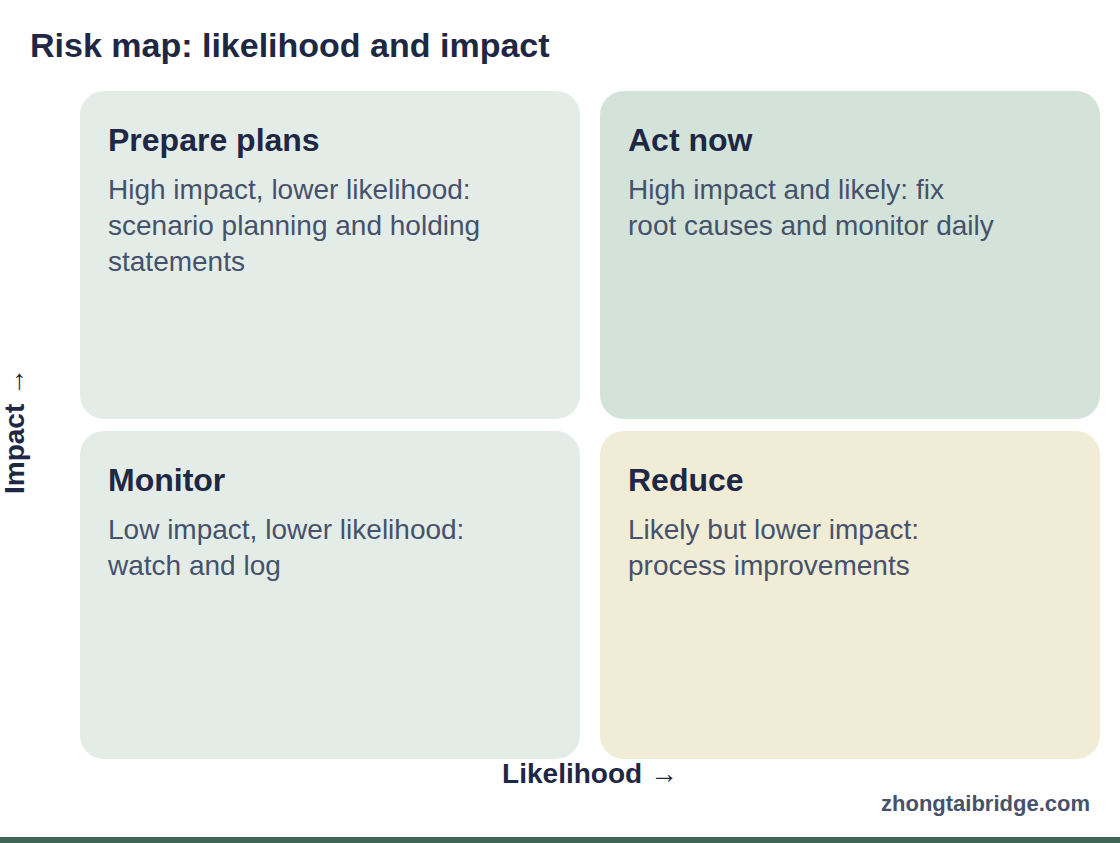
Two-by-two matrix. Horizontal axis: Likelihood. Vertical axis: Impact. Prepare plans: High impact, lower likelihood: scenario planning and holding statements. Act now: High impact and likely: fix root causes and monitor daily. Monitor: Low impact, lower likelihood: watch and log. Reduce: Likely but lower impact: process improvements.
The first 24 hours
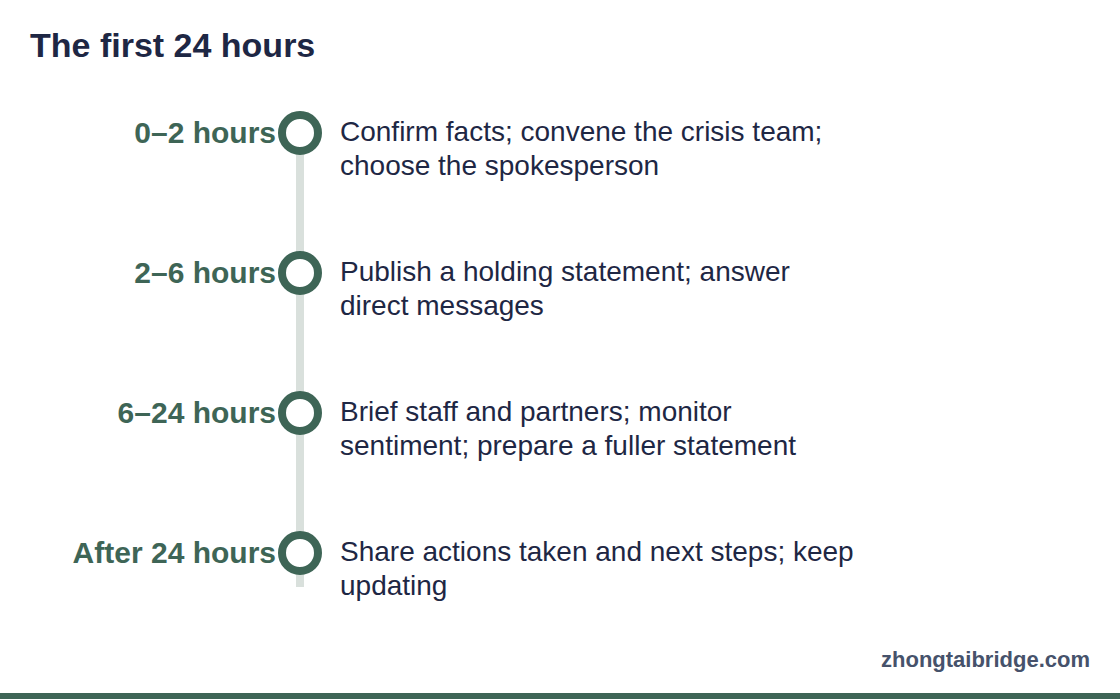
Timeline. 0–2 hours: Confirm facts; convene the crisis team; choose the spokesperson. 2–6 hours: Publish a holding statement; answer direct messages. 6–24 hours: Brief staff and partners; monitor sentiment; prepare a fuller statement. After 24 hours: Share actions taken and next steps; keep updating.
Adapt the structure to your case and have a native Thai speaker finalize it. First, acknowledge the issue and express concern for those affected. Second, state what you know and what you are checking. Third, describe immediate actions and who can be contacted. Fourth, promise an update by a specific time. Avoid speculation, blame and legal language that sounds evasive.
The example is illustrative. A customer posts a video showing a small appliance overheating. The post is shared widely within hours and Thai media ask for comment. The crisis team convenes, confirms the product batch with engineering and prepares a holding statement in Thai that expresses concern, advises customers to stop using affected units and promises an update within six hours. It contacts the customer privately, offers a replacement and collects the unit for testing. Within a day, it announces the findings, offers a free inspection or replacement and describes the corrective action at the factory.
The brand's tone is calm, specific and respectful. It avoids blaming the customer or arguing in the comments and it keeps Chinese and Thai statements consistent. Because the team had prepared contacts, templates and a spokesperson, it responds before speculation hardens.
Should we apologize immediately? Acknowledge concern right away, and apologize for confirmed harm or error. Avoid admitting fault on facts you have not verified.
Who approves statements? A small crisis team with delegated authority, including legal, communications and a Thai-speaking spokesperson, so that approval takes hours, not days.
What about social media comments? Monitor and respond to factual questions, avoid arguing and move conversations to private channels where appropriate.
How do we keep Chinese and Thai messages consistent? Draft in one language, translate by a native speaker for the other and approve both together.
A trained, senior spokesperson who can communicate in Thai or with an interpreter, supported by a crisis team.
No. Respond to issues that are factual, safety-related or widely shared, and monitor the rest.
Sources
Earn coverage and credibility in Thai press, online and off.
 PR & Media
How foreign brands earn credible coverage in Thailand: newsworthy angles, Thai-language releases, media targeting, spokespeople, timeline and measurement.
Read article → PR & Media
How to build executive visibility in Thai media: outlet types, pitching, language, commentary, speaking and measuring influence beyond coverage counts.
Read article → Market Entry
A six-stage guide for Chinese companies entering Thailand, with 2026 market data, a China-to-Thailand translation table, a 90-day plan and a launch checklist.
Read article →Tell us about your business and goals.
We'll reply within 1–2 business days with next steps.