
PR in Thailand for Foreign Brands: How to Earn Credible Coverage
How foreign brands earn credible coverage in Thailand: newsworthy angles, Thai-language releases, media targeting, spokespeople, timeline and measurement.
Read article →PR & Media

Photo: Unsplash
Short answer
Executive thought leadership in Thailand works through a mix of business dailies, English-language outlets, trade media and events, delivered in natural Thai. Offer original data and a clear point of view, build relationships with a small set of journalists, and measure influence by quality of mentions, not volume.
Outlets and formats change, so verify each outlet's audience and editorial focus before you pitch.
Media types and what they offer
| Type | Reaches | Best for |
|---|---|---|
| Thai-language business and general news | Thai executives and consumers | Credibility with local audiences |
| English-language outlets | Foreign communities, regional readers | Regional visibility |
| Trade and marketing media | Industry buyers, brand and agency professionals | Sector authority |
| Video and social platforms | Direct audiences | Executive voice, product education |
| Associations and events | Peers and partners | Relationships |
A pitch in five steps
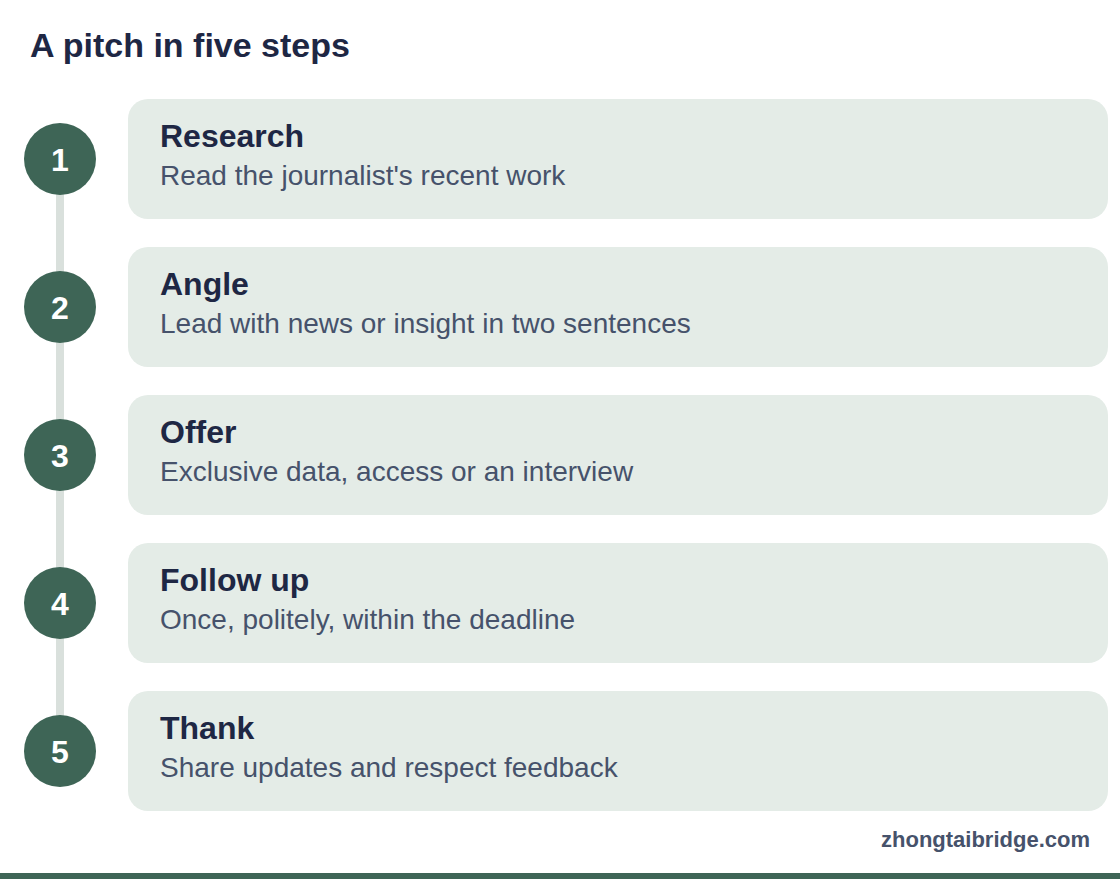
Process diagram. 1. Research: Read the journalist's recent work. 2. Angle: Lead with news or insight in two sentences. 3. Offer: Exclusive data, access or an interview. 4. Follow up: Once, politely, within the deadline. 5. Thank: Share updates and respect feedback.
Each topic should link a global trend to something specific and verifiable in Thailand.
The example is illustrative. A senior executive of a Chinese electronics company opens a Thai service center and wants to be taken seriously by Thai business media. The team identifies three themes: local training and jobs, product safety and service standards, and how Thai SMEs benefit from lower-cost technology. It prepares a short data pack with the number of technicians trained, the number of Thai suppliers engaged and independent test results. It offers a journalist an exclusive visit to the service center and an interview in Thai with an interpreter available. Over the next quarter, it publishes a byline article on service standards and joins one industry panel.
The effect is cumulative. Each appearance reuses the same themes with new evidence, so that editors learn what the executive can speak about and audiences see consistency. The mistakes to avoid are claiming leadership without proof, ignoring local concerns about competition and giving different messages to Thai and Chinese audiences.
Earned coverage is not the only route. A LinkedIn presence for the company and executive, a Thai-language newsletter and webinars with partners create direct reach that does not depend on editors. Publish original data and share it with relevant journalists, then link coverage from your website to strengthen search and AI visibility. Keep a simple calendar that places executive moments, product milestones and Thai holidays on one timeline, so that you do not pitch during peak news periods or festivals.
Should the CEO or a local manager be the spokesperson? Use the person who can speak credibly about Thailand-specific commitments and answer questions in Thai or with an interpreter. A senior leader adds weight for major announcements, and a local manager is better for everyday topics.
Do we need a PR agency? Not necessarily. An agency helps with relationships, language and timing. If you work alone, build a media list of ten journalists and learn their beats.
How often should we publish? One strong piece a quarter with original data beats weekly generic posts.
How do we avoid backlash on sensitive topics? Prepare honest answers on pricing, competition with local firms and employment, and avoid exaggeration.
Paid placements are advertising and should be labeled. Earned coverage is more credible but takes work.
Quality matters more than frequency. A few well-prepared appearances a quarter can be effective.
Earn coverage and credibility in Thai press, online and off.
 PR & Media
How foreign brands earn credible coverage in Thailand: newsworthy angles, Thai-language releases, media targeting, spokespeople, timeline and measurement.
Read article → PR & Media
How to prepare for reputational crises in Thailand: risk mapping, response protocols, tone, Thai-language statements and lessons from Chinese visitor and EV cases.
Read article → Market Entry
A six-stage guide for Chinese companies entering Thailand, with 2026 market data, a China-to-Thailand translation table, a 90-day plan and a launch checklist.
Read article →Tell us about your business and goals.
We'll reply within 1–2 business days with next steps.